News
How To Put On Your New Kilt
Wearing a kilt can be a bit tricky if you're not used to it, but with a little practice, you can easily master it. Here are the steps to follow:
-
Put on your kilt hose or socks: Before you put on your kilt, you'll need to put on your kilt hose or socks. These are knee-high socks that are usually made of wool or cotton. They should be folded over at the top to create a cuff that sits just below your knee.
-
Put on your ghillie brogues: Ghillie brogues are a type of traditional Scottish shoe that laces up the ankle. They are often worn with kilts and are designed to be comfortable and flexible. Make sure they are securely laced up.
-
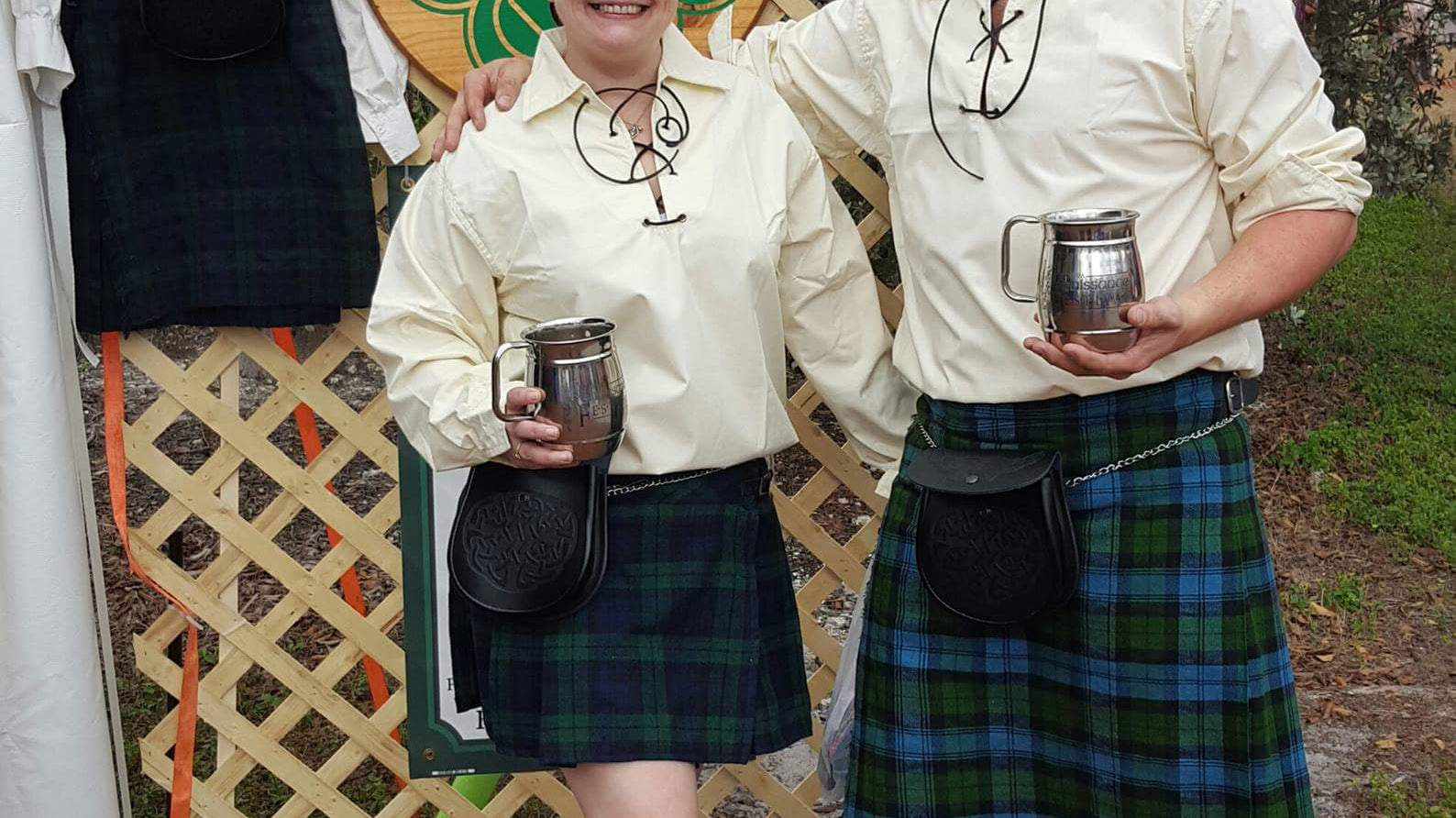
Put on your kilt: Wrap you kilt around you, with the pleats in the back. Make sure the top of the kilt sits just below your rib cage. The apron (the flat piece of fabric at the front of the kilt) should be centered at the front of your body.
-
Fasten the kilt: Using the straps on either side of the kilt, fasten it securely around your waist. The left strap should be passed over to the right hip, while the right strap should be passed over to the left hip. Buckle the straps at the sides of your waist, making sure the kilt is snug but not too tight.
-
The bottom of the apron should sit just above or at the center of your knee.
-
Add a sporran: A sporran is a traditional Scottish pouch that is worn at the front of the kilt. It's typically made of leather or fur and is used to carry small items. The sporran should be positioned in the center of the apron, just below the waistband.
-
Adjust the pleats: Finally, adjust the pleats of the kilt so that they are evenly spaced and lying flat. They should be facing towards the back of your body. Once you've done this, you're ready to go!
Note: Some kilts may arrive with a loose running stitch along the bottom of the pleats. This is for shipping purposes only and should be removed before wearing.
Product updates and news!
Well one good thing about stay at home orders is it has given me time to get some updates to the website! We've added a whole bunch of new tartan kilts, including: Clan Keith, MacArthur, MacCauley, MacDonald Ancient, MacIntyre Hunting, MacLachlan Modern, MacLaren Ancient, MacMillan Hunting, MacNaughton, MacPhee, Malcolm, Maxwell, Montgomery, Muir, Muirhead, Munro, Ross Hunting Muted, Turnbull, and more. We've also added the leather kilts so many have been requesting!
The updates will be continuing over the coming weeks, including more budget kilts, new items, exciting new product lines, and more. Keep checking back to see all the wonderful kilted goodness coming your way!
We are taking orders and shipping! Statement on Covid-19
How to choose a tartan
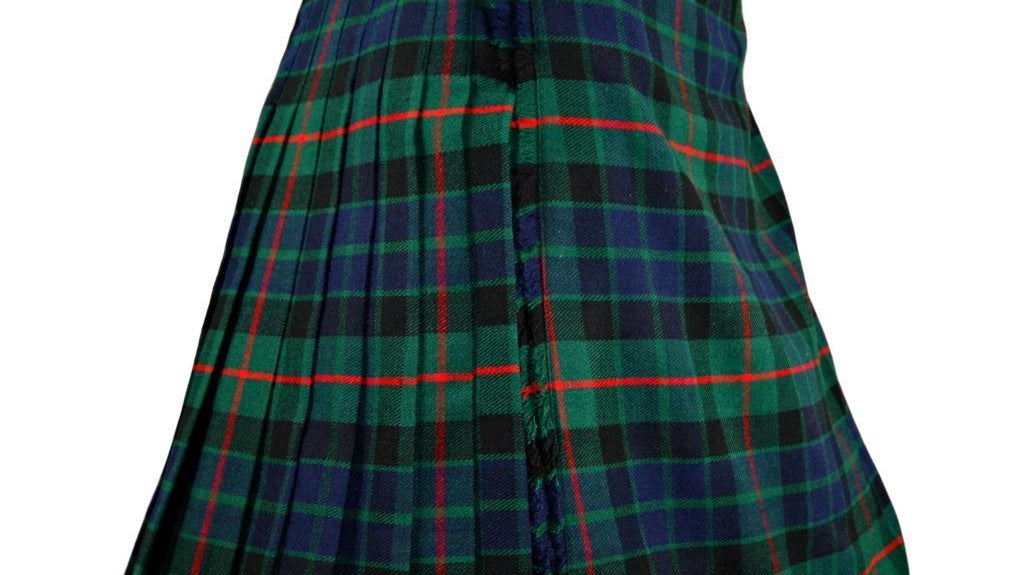
Some of the questions we are commonly asked here at Highland Kilt Company are “Which tartan do I choose for my kilt based on my name?” and “I don’t have a clan, which kilts are appropriate for me to wear?”. In this post, we’ll explain a bit about tartan backgrounds and options!
If you would like to go with something that ties into your own family history for your kilt, and your last name is common like MacDonald or your Grandmother was a Wallace, then not much research is required. You’ll be able to find those tartans right away using the search function in our upper left corner. If your last name is MacDonald AND your Grandmother was a Wallace, the good news is feel free to choose either tartan for your kilt!
Clans also have what are called Septs, or other family names which fall under them. If you don’t see you Clan via our search or on our Scottish Kilts page, we can look up your (or your ancestors) Scottish surname to see if they fall under another Clan to help determine your tartan. For instance, Robinson is a Sept of the Gunn clan, etc. (For an interesting read as to why that is, here you go: http://skyelander.orgfree.com/gunnsept.html).
If you have several Scottish ancestors, feel free to pick whichever you prefer for your kilt. I have several, including MacGregor, MacKay, and MacLeod, and am a Sept of MacDonald, so I rotate among them often!
Some Scottish clans do not have their own tartan, but rather fall under District tartans like Glasgow District, etc. Many of these can be a bit harder to find ‘off the rack’, but the premise is they are tied to an area, not a name. Some names may have no tartan suggestion at all. But never fear: universal tartans are here!
If you have a harder to find clan tartan, district tartan, or if you prefer to wear a kilt without clan ties, the many universal tartans we carry at Highland Kilt Company will appeal to you. Black Watch (or Government Sett) is a very popular tartan, and other universal tartans include Hunting Stewart, Grey Watch, Brown Watch, Highland Grey, etc. Many people will choose a universal tartan kilt for wedding parties as well to create a uniform look, or as a secondary kilt in addition to their Clan tartan.
Few Irish tartans are tied to family names but are more universal/District based tartans. Tara and Ulster are both good examples of this, with Tara representing the Irish Midlands, and Ulster representing the North of Ireland. Saffron and Solid Green are also excellent historically Irish choices.
Lastly: the most important thing is you choose a tartan you like for your kilt! That is all that matters. We’re here to guide you through that process of purchasing your kilt and selecting your tartan. Contact us today to get started!